
Una critica che potrei muovere a Crick riguarda l’apparizione della consapevolezza. Crick crede “che la consapevolezza spesso comporti che il cervello decida quale interpretazione sia la più plausibile”. Il sintagma “che il cervello decida” mi induce a pensare a qualcuno-qualcosa che abbia la facoltà di decidere, svincolato dalla volontà mia ossia del mio Io. Come dire che, accettando di considerare la scena in questa ottica, io stesso mi sentirei subordinato al mio cervello, come una macchina biologica che seguisse alla lettera un programma prefissato. Qualcosa di deludente dunque, di declassante, dove andrebbe in evanescenza la mia personalità capace di volere e di decidere. È la conclusione, secondo il mio modo di vedere, di questo affidarsi con il massimo di fiducia a processi fisici, neuronali, a esclusione di qualsivoglia altra possibilità che potrebbe per ipotesi scaturire da una dimensione non fisica. In altre parole, dalla descrizione fatta da Crick parrebbe che noi, come entità coscienti, come “Io” individuali siamo dotati di un organo subalterno che tramite il lavoro delle connessioni inter-neuronali si occupi di tutto, e che per noi non resti altro che fare da spettatori contemplando i misteriosi processi demandati a disciplinare la nostra vita. Lo stesso Crick, comunque, si dichiara molto onestamente impotente nei tentativi di comprendere come realmente vadano le cose poste sotto analisi e, con tutta sincerità, si lascia sfuggire una confessione doverosa e che gli merita l’attribuzione di un giusto onore scientifico: “Se pensate che io stia cercando a tentoni una pista nella giungla, avete proprio visto giusto”. Una certezza, tuttavia, la vuole esprimere: “La coscienza dipende in modo cruciale dalle connessioni del talamo con la corteccia. Essa esiste solo se certe aree corticali presentano circuiti riverberanti interessanti gli strati corticali IV e VI, con proiezioni abbastanza forti da produrre un riverbero significativo”. E questo mi sta bene, ci può stare nell’analisi che vado sviluppando. La coscienza sarebbe intimamente connessa alla dinamica dei circuiti riverberanti nelle aree corticali. Penso però che questo sia il suo destino fin tanto che l’organismo biologico è in vita. Tutto bene fin qui, fino alla fine dei giorni del soggetto vivente. Penso, un po’ ingenuamente, a una sorta di alleanza senza i termini della quale l’organismo sarebbe un fantoccio immobile e insensibile e in forza della quale si produca un’attività conforme alla natura del Pianeta che della vita individuale e collettiva dispone. Come accade nella missilistica, allorché si lancia un razzo vettore che, raggiunta la quota e la velocità voluta, abbandona gli stadi che lo hanno spinto e procede la sua corsa nel vuoto senza bisogno di supporto fisico, così, e mi scuso per la rozzezza della similitudine, la nostra anima si librerebbe nell’infinito ineffabile dopo aver abbandonato il suo sistema propulsivo terreno, il corpo organico con il quale aveva percorso molta strada sulla via della conoscenza. Tutto questo comporta che fra l’anima e il corpo esista, per il tempo della vita organica, una certa affinità di intenti e di operatività in quanto l’anima, ospitata temporaneamente dal corpo, si adegua alla natura di questo e ne condivide percezioni e moti spirituali. Allorché con l’ausilio del corpo ritiene di avere portato a buon fine la propria missione, allora può staccarsene e seguire il proprio percorso. Vivrebbe in connessione stretta con il corpo soltanto perché questa connessione è necessaria per conseguire risultati significativi nell’acquisizione della conoscenza, in conformità con le leggi e con la natura della vita terrena nella quale l’organico è immerso.
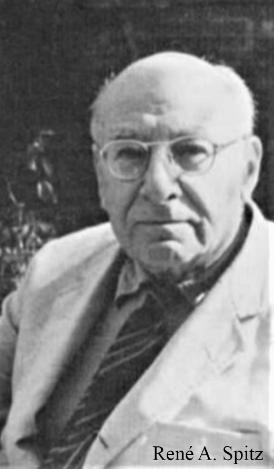
Vado a concludere questa succinta carrellata nella sfera degli studi in chiave evolutiva con il pensiero di un eminente studioso e sperimentatore di fine millennio, René A. Spitz, nato nel 1887 a Vienna. Si occupò soprattutto dell’istanza dell’“Io”, della sua ontogenesi e della sua struttura in una matrice freudiana di ricerca portando il riferimento a Sigmund Freud nel momento di sostenere l’inesistenza del pensiero, dell’immaginazione, della percezione (che viene acquisita durante il primo anno di vita, a muovere dal terzo mese), della volontà, della sensazione al tempo della nascita fisiologica ossia nella convinzione che il bambino si troverebbe in uno stato del tutto indifferenziato. Per questo, appunto, Spitz non riconosce la presenza di un “Io” alla nascita. Come osserva Anna Freud nel testo a cui mi sono appoggiato (René A. Spitz, Il primo anno di vita del bambino. Genesi delle prime relazioni oggettuali, Giunti Barbera Ed., 1962, Originale 1958, Traduzione di Giuseppe Galli e Anna Arfelli-Galli), “esiste uno stadio iniziale indifferenziato, partendo dal quale si assiste ad uno sviluppo lento e continuo di funzioni, di pulsioni distinte, di strutturazioni successive, cioè dei processi psicologici che emergono gradualmente da stati fisiologici preliminari, che ne costituiscono il substrato”. E Spitz aggiunge che alla nascita non sia possibile parlare di simbolismo e di interpretazioni simboliche: “Infatti i simboli sono legati all’acquisizione del linguaggio… Durante il primo anno ci è possibile ritrovare solo i precursori di questi meccanismi, in forma più fisiologica che psicologica”. Secondo Spitz esiste “una transizione fra fisiologico e psicologico”. Il primo e il secondo anno di vita costituiscono un periodo di plasticità insuperabile persino negli anni che seguiranno in quanto si vanno attuando transizioni continue, trasformazioni rapide, violente, spesso tempestose.
Dato che nell’argomento visitato occorre spesso la parola “psicologico”, palesemente derivante da “psiche”, penso sia il caso di dare maggiore chiarezza a quest’ultimo termine, ed ecco quel che se ne dice: complesso delle funzioni sensitive, affettive e mentali di un individuo. Questa definizione laconica, tratta da un’enciclopedia, dice nulla di nuovo. Più significativi, nell’analisi che cerco di portare avanti, ritornano sia il mito di Amore e Psiche tramandatoci da Apuleio (125-180 circa d.C.) sia l’interpretazione allegorica delle correnti cristiane che in esso trovano simbolizzata la storia dell’anima umana la quale, attraverso tormenti e difficoltà di ogni sorta, cerca e raggiunge la propria beatitudine nel congiungimento e nell’amore di Dio.
Esaurita l’inclusione di cui sopra, torniamo frettolosamente al bambino il quale attraverserebbe momenti specifici durante i quali si verificano cambiamenti di direzione, riorganizzazioni complete della struttura psichica, il tutto in un nuovo sviluppo. A questo riguardo Spitz parla del succedersi di periodi critici nello sviluppo, attraverso i quali “avviene una integrazione delle correnti evolutive operanti nei differenti settori della personalità, fra loro e con i processi di maturazione. Questa integrazione porta alla formazione di una struttura psichica nuova, di complessità più elevata”. Spitz definisce con il termine “organizzatore” il risultato dell’integrazione completa. Un primo organizzatore si ravvisa nella risposta sociale che il bambino produce al termine del terzo mese di vita con il sorriso aperto di fronte al volto della persona adulta. Il secondo organizzatore dà segni di sé attorno all’ottavo mese esprimendosi in atteggiamenti di angoscia alla presenza di un estraneo. In quanto al terzo organizzatore la fase di apparizione si presenta allorché il bambino, che ha iniziato a camminare, si sente interrompere nelle proprie iniziative di esplorazione dai ripetuti “no” della madre. Questi “no” vengono compresi dal bambino nel loro significato di proibizione grazie a un processo di identificazione. I gesti di diniego delle mani e del capo e la parola “no” della madre “sono i primi simboli semantici formati dal bambino” in quanto rappresentano un concetto, “il primo concetto astratto che si cristallizza nella vita mentale del bambino”. Ogni proibizione proferita dalla madre è recepita dal bambino come una frustrazione portatrice di un conflitto intrapsichico poiché il bambino si sente impedito nella sua volontà di uscire dallo stadio narcisistico primario, mentre con tutte le sue forze vuole entrare nello stadio attivo delle relazioni oggettuali. Per risolvere tale conflitto egli ricorre a mettere in atto un meccanismo di difesa, quello che Anna Freud definì “identificazione con l’aggressore” ossia con la persona, in questo caso la madre, causa della frustrazione. Tale identificazione condurrà il bambino a esperire “un attacco diretto contro il mondo esterno. Nel bambino di 15 mesi questo attacco prende la forma del ‘no’ (gesto e poi parola) di cui il bambino stesso si è appropriato”. È il periodo che vede imporsi l’ostinazione, ma questa si rivela come “un progresso di portata straordinaria per lo sviluppo mentale ed affettivo del bambino, e presuppone l’acquisizione della facoltà di ragionamento e della negazione… Con la conquista del gesto di diniego incomincia la comunicazione a distanza, e l’azione è rimpiazzata dalle parole… Incomincia la discussione. Questo è il più importante momento nello sviluppo dell’individuo e della specie”.
Tanta teoria fin qui. Vediamo allora, questo è il momento propizio, di procedere nell’analisi più concreta della questione affrontata, quella dell’anima, ma concreta nel senso di una concretezza concettuale accessibile e metabolizzabile per elaborazione. Tutta questa lunga elucubrazione di concetti vaganti nella sfera dell’astrazione a che cosa vuole approdare? Bene, semplicemente a creare una cornice di ampio respiro investigativo su ciò che è la mente, visto che vado trattando un argomento che dovrebbe portarmi addirittura a definire l’essenza dell’anima. Ma, intanto: l’anima esiste? Dio esiste? Sono due questioni che si muovono all’interno di una sfera di pura astrazione. Dimostrarne l’esistenza è cosa assai ardua, più propriamente impossibile; ci hanno provato in molti, le costruzioni teoretiche sono state elaborate in misura sovrabbondante e i risultati devono la propria concretezza di comprensione alle persone che sullo stesso binario inquisitivo hanno imparato a progredire. Posso in questo delicato frangente appoggiarmi a una definizione di Giacomo Leopardi, trovata nel suo Zibaldone di Pensieri: “Una delle più grandi prove dell’immortalità dell’anima è l’infelicità dell’uomo”.
Ma neppure la mente rientra in una definizione oggettivamente accettabile. Da parte mia, vado ribadendo, sono propenso a dare credito alla convinzione che noi siamo essenzialmente sostanza spirituale ossia mente, coscienza, volontà. Non si sa perché, ma abitiamo in un corpo che non abbiamo scelto e al quale non abbiamo accordato la possibilità o meno di venire al mondo. Dunue due realtà: una materiale e una spirituale, intimamente connesse nell’que due realtà: una materiale e una spirituale, intimamente connesse nell’arco della vita delle persone. Il corpo proviene dalla materia, da quei due gameti che un giorno si incontrarono per via e da quel momento si sono affrettati a seguire del tutto inconsciamente una serie di leggi preordinate per il raggiungimento di uno scopo preciso. Una serie di leggi: quest’ultimo termine aprirebbe qui un nuovo capitolo per via delle domande che si trascinerebbe appresso. Leggi pensate, architettate, create, formulate. Ma da chi? Per quale scopo? L’uomo che abita questo bel Pianeta, magnifico e inospitale al tempo stesso, fa di tutto nel corso dei suoi anni per rendervi la residenza più gradevole possibile, per accrescere il senso di Sé e per alimentare l’illusione di potenza e di ricerca dell’immortalità. Per qualche verso ci riesce, almeno nell’anelito al piacere, ma poi, superate tutte le tappe del proprio esistere, piacevoli e meno piacevoli, si arrende di fronte all’incalzare del proprio destino, deve abbandonare tutto, deve separarsi dagli affetti più cari, dalle conquiste sue nell’ambito della cultura, dai beni accumulati, dal potere che credeva di poter esercitare per sempre. E tutto finisce con una manciata di terra, come se il povero viandante di turno non fosse mai passato sulle contrade di questo suo mondo. Vado riprendendo, mentre mi appresto a concludere questa parte del discorso intrapreso, quanto affermavo all’inizio della stesura di questi pensieri.
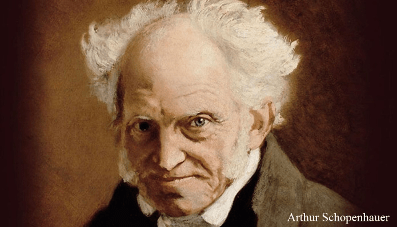
Allora, se tutto finisce qui, torno a dire, che ci siamo venuti a fare? Diciamo pure che ci siamo arrivati per l’estrinsecarsi di una Volontà che non conosciamo, in ossequio a una serie di leggi naturali che hanno stabilito così, o per puro caso. Ma anche il caso non può agire senza che gli sia stata imposta una determinata direzione. Diciamo pure, ancora, che sia possibile ipotizzare l’esistenza di un’Entità suprema, sconosciuta e inconoscibile, detentrice di una Volontà (vorrei qui ricordare Arthur Schopenhauer, Il mondo come volontà e rappresentazione, Laterza Ed. Roma, Bari 1979) senza limiti di potenza creatrice. Ci sono alcuni indizi che lasciano spazio alla formulazione di un sillogismo quasi perfetto a proposito di questa credenza. Ossia ammiriamo la presenza di leggi nell’Universo conosciuto, la precisione e la puntualità con le quali queste leggi danno la spinta a fenomeni dinamici addirittura prevedibili, calcoli alla mano, dagli scienziati; pensiamo soltanto al verificarsi delle eclissi, ai passaggi di comete e meteoriti e quant’altro possa cadere sotto la nostra osservazione. Ora, se ci sono leggi, queste non si sono fatte da sé, ci deve essere un autore alla loro origine, una mente che le ha pensate e stabilite nell’insieme di un piano ordinato verso uno scopo. Dunque anche un’intenzione generatrice di fenomeni, in assenza della quale regnerebbe soltanto il caos. Un Artefice, a ogni modo, al quale non possiamo attribuire un nome perché non possiamo nominare ciò che non conosciamo; un Artefice, esistente soltanto nelle nostre supposizioni, che esiste per un nostro tentativo di ragionamento induttivo. È questo il momento propizio per cui mi voglio avventurare nell’architettura di un tessuto di per sé inspiegabile, ricorrendo pertanto a raffazzonare nozioni tratte dal sapere scientifico, dall’immaginazione artistica, dalla fantasia pura e dalle credenze religiose. Un tessuto dalle maglie instabili, composto secondo un ordito ancora traballante e ben poco garante di certezze. Non vedo altra via per provare a inoltrarmi in una questione così spinosa come quella che mi sta aspettando, e allora ci proverò.
Immagine di copertina tratta da Oprah Daily.
My dear soul!
Part IV of 5
“I could level some criticism at Crick regarding the appearance of consciousness. Crick believes that “consciousness often involves the brain deciding which interpretation is the most plausible”. The phrase “that the brain decides” leads me to think of someone or something that has the power to decide, independent of my will, or my ego. In other words, if I accept to consider the scene from this perspective, I would feel myself subordinated to my brain, like a biological machine that follows a pre-set program to the letter. Something disappointing, therefore, declassing, where my personality capable of wanting and deciding would vanish. This is the conclusion, in my opinion, of this reliance on physical, neuronal processes, to the exclusion of any other possibility that could hypothetically emerge from a non-physical dimension. In other words, from Crick’s description, it would appear that we, as conscious entities, as individual “I”, are endowed with a subordinate organ that, through the work of inter-neuronal connections, takes care of everything, and that for us there is nothing left but to be spectators contemplating the mysterious processes entrusted with disciplining our lives. Crick himself, however, honestly declares himself powerless in the attempts to understand how things really go under analysis, and, with all honesty, he lets slip a necessary confession that deserves him the attribution of a just scientific honor: “If you think I’m groping my way along a track in the jungle, you’re right”. However, he wants to express one certainty: “Consciousness crucially depends on the connections of the thalamus to the cortex. It exists only if certain cortical areas have reverberating circuits that affect the cortical layers IV and VI, with projections strong enough to produce a significant reverberation”. And this is fine with me, it can be in the analysis I am developing. Consciousness would be intimately connected to the dynamics of reverberating circuits in cortical areas. However, I think that this is its destiny as long as the biological organism is alive. Everything is fine so far, until the end of the days of the living subject. I think, a bit naively, of a sort of alliance without the terms of which the organism would be an immobile and insensitive puppet and by virtue of which an activity in accordance with the nature of the Planet that of individual and collective life disposes is produced. As happens in missile technology, when a launch vehicle is launched, which, once it has reached the desired altitude and speed, abandons the stages that have propelled it and proceeds on its journey in the void without the need for physical support, so, and I apologize for the crudeness of the analogy, our soul would soar into the ineffable infinity after abandoning its earthly propulsion system, the organic body with which it had traveled a long way on the path of knowledge. All this implies that between the soul and the body, for the time of organic life, there exists a certain affinity of intentions and operability in that the soul, temporarily hosted by the body, adapts to the nature of this and shares its perceptions and spiritual movements. When, with the help of the body, it believes to have successfully completed its mission, then it can detach itself and follow its own path. It would live in close connection with the body only because this connection is necessary to achieve significant results in the acquisition of knowledge, in accordance with the laws and with the nature of earthly life in which the organic is immersed.”
I conclude this brief overview of evolutionary studies with the thought of an eminent scholar and experimenter at the end of the millennium, René A. Spitz, born in Vienna in 1887. He was mainly concerned with the “ego”, its ontogenesis and its structure in a Freudian research matrix, referring to Sigmund Freud when he supported the non-existence of thought, imagination, perception (which is acquired during the first year of life, starting from the third month), will, sensation at the time of physiological birth, or in the belief that the child would be in a completely undifferentiated state. For this reason, Spitz does not recognize the presence of an “ego” at birth. As Anna Freud observes in the text on which I have relied (René A. Spitz, The First Year of Life of the Child. Genesis of the First Object Relations, Giunti Barbera Ed., 1962, Original 1958, Translation by Giuseppe Galli and Anna Arfelli-Galli), “there is an initial undifferentiated stage, starting from which one witnesses a slow and continuous development of functions, distinct drives, successive structurings, that is, of psychological processes that gradually emerge from preliminary physiological states, which constitute their substrate “. And Spitz adds that at birth it is not possible to speak of symbolism and symbolic interpretations: “In fact, the symbols are linked to the acquisition of language … During the first year we can only find the precursors of these mechanisms, in a more physiological than psychological form”. According to Spitz there is “a transition between physiological and psychological”. The first and second years of life constitute a period of insuperable plasticity even in the years that will follow, as continuous transitions, rapid, violent, often stormy transformations are taking place.
Given that the word “psychological” is often used in the subject visited, clearly derived from “psyche”, I think it is appropriate to give greater clarity to the latter term, and here is what it is said: complex of sensitive, affective and mental functions of an individual. This laconic definition, taken from an encyclopedia, says nothing new. More significant, in the analysis I am trying to carry out, both the myth of Amore and Psyche handed down to us by Apuleius (125-180 AD) and the allegorical interpretation of the Christian currents that find in it symbolized the story of the human soul which, through torments and difficulties of all kinds, seeks and reaches its own bliss in the conjunction and love of God.
Having exhausted the inclusion above, we quickly return to the child who would go through specific moments during which changes in direction, complete reorganizations of the psychic structure, all in a new development, take place. In this regard, Spitz talks about the succession of critical periods in development, through which “an integration of the evolutionary currents operating in the different sectors of the personality, between them and with the maturation processes, takes place. This integration leads to the formation of a new psychic structure, of higher complexity “. Spitz defines the result of complete integration with the term “organizer”. A first organizer is seen in the social response that the child produces at the end of the third month of life with an open smile in front of the face of the adult. The second organizer shows signs of itself around the eighth month by expressing itself in attitudes of anxiety in the presence of a stranger. As for the third organizer, the appearance phase occurs when the child, who has started walking, feels interrupted in his own exploration initiatives by the repeated “no” of the mother. These “no” are understood by the child in their meaning of prohibition thanks to a process of identification. The gestures of denial of the hands and head and the word “no” of the mother “are the first semantic symbols formed by the child” as they represent a concept, “the first abstract concept that crystallizes in the child’s mental life”. Every prohibition uttered by the mother is perceived by the child as a frustration that carries an intrapsychic conflict because the child feels prevented in his will to leave the primary narcissistic stage, while with all his strength he wants to enter the active stage of object relations. To resolve this conflict, he resorts to putting into effect a defense mechanism, which Anna Freud defined as “identification with the aggressor” or with the person, in this case, the mother, the cause of the frustration. Such identification will lead the child to experience “a direct attack on the external world”.
In a 15-month-old child, this attack takes the form of the “no” (gesture and then word) of which the child has appropriated itself. This is the period that sees obstinacy imposed, but this reveals itself as “a progress of extraordinary scope for the mental and affective development of the child, and presupposes the acquisition of the faculty of reasoning and denial… With the conquest of the gesture of denial, communication begins at a distance, and action is replaced by words… The discussion begins. This is the most important moment in the development of the individual and the species.
So much theory so far. Let’s see then, this is the propitious moment, to proceed in the more concrete analysis of the issue at hand, that of the soul, but concrete in the sense of a conceptual concreteness accessible and metabolized for processing. All this long lucubration of concepts wandering in the sphere of abstraction wants to reach what? Well, simply to create a broad investigative framework on what the mind is, since I am dealing with a topic that should lead me to even define the essence of the soul. But, in the meantime: does the soul exist? Does God exist? These are two issues that move within a sphere of pure abstraction. Proving their existence is very difficult, more properly impossible; many have tried, theoretical constructions have been elaborated in an abundant measure and the results owe their concreteness of understanding to the people who have learned to progress on the same investigative track. In this delicate juncture, I can rely on a definition by Giacomo Leopardi, found in his Zibaldone di Pensieri: “One of the greatest proofs of the immortality of the soul is the unhappiness of man.”
But even the mind does not fall within an objectively acceptable definition. On my part, I keep reiterating, I am inclined to give credit to the belief that we are essentially spiritual substance, namely mind, consciousness, will. It is not known why, but we inhabit a body that we have not chosen and to which we have not granted the possibility or not of coming into the world. Therefore two realities: a material one and a spiritual one, intimately connected in the course of people’s lives. The body comes from matter, from those two gametes that one day met along the way and from that moment they hastened to follow completely unconsciously a series of preordained laws for the achievement of a precise purpose. A series of laws: this last term would open a new chapter here due to the questions that it would drag along. Laws thought, architected, created, formulated. But by whom? For what purpose? The man who inhabits this beautiful Planet, magnificent and inhospitable at the same time, does everything in his years to make it as pleasant a residence as possible, to increase the sense of Self and to feed the illusion of power and the search for immortality. In some way he succeeds, at least in the yearning for pleasure, but then, having overcome all the stages of his existence, pleasant and less pleasant, he surrenders in the face of the relentlessness of his own destiny, he must abandon everything, he must separate himself from the dearest affections, from his conquests in the field of culture, from the accumulated goods, from the power that he believed he could exercise forever. And everything ends with a handful of earth, as if the poor wayfarer of the turn had never passed through the contrade of this his world. I am going back, as I prepare to conclude this part of the speech undertaken, what I stated at the beginning of the drafting of these thoughts.
So, if everything ends here, I ask again, what are we here for? Let’s say that we arrived here by the unfolding of a Will that we do not know, in obedience to a series of natural laws that have established it so, or by pure chance. But even chance cannot act without being given a certain direction. Let’s say, again, that it is possible to hypothesize the existence of a supreme Entity, unknown and unknowable, holder of a Will (I would like to recall Arthur Schopenhauer, The World as Will and Representation, Laterza Ed. Rome, Bari 1979) without limits of creative power. There are some clues that leave room for the formulation of an almost perfect syllogism about this belief. That is, we admire the presence of laws in the known Universe, the precision and punctuality with which these laws give the impetus to dynamic phenomena that are even predictable, with calculations in hand, by scientists; let’s think only of the occurrence of eclipses, the passage of comets and meteorites and anything else that may fall under our observation. Now, if there are laws, they did not make themselves, there must be an author at their origin, a mind that has thought them out and established them as part of an orderly plan towards a goal. Therefore also an intention generating phenomena, in the absence of which chaos would reign. A Craftsman, in any case, to whom we cannot attribute a name because we cannot name what we do not know; a Craftsman, existing only in our assumptions, which exists for our attempt at inductive reasoning. This is the propitious moment for which I want to venture into the architecture of a fabric that is in itself inexplicable, resorting therefore to patchy notions drawn from scientific knowledge, artistic imagination, pure fantasy, and religious beliefs. A fabric with unstable meshes, composed according to a warp that is still shaky and very little guaranteed of certainties. I do not see any other way to try to enter into such a thorny issue as the one that awaits me, and then I will try.
 Mario Bruno